Somebody in your group has found a photograph of a Caribbean beach buried in brown seaweed and is now worried about the holiday. Here is a proportionate answer.
Sargassum is a floating brown seaweed that drifts across the Atlantic and washes up on windward Caribbean shores. In a bad year on a bad coastline it is genuinely unpleasant — thick on the sand, and it smells as it rots. In Turks and Caicos it is real, it is variable, and it affects some beaches far more than others.
The honest version for these islands
Three things are true at once, and holiday forums usually only tell you one of them.
One: sargassum does reach Turks and Caicos, and in heavy influx years some shorelines get a lot of it.
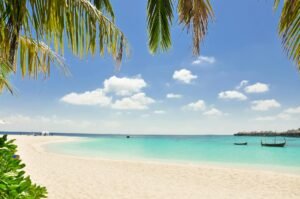
Two: it is not evenly distributed. Coasts facing into the prevailing easterly wind and current collect it. Coasts that are sheltered, or protected by reef, collect much less. Grace Bay, which is north-facing and sits behind the barrier reef, is generally among the better-protected stretches on Providenciales — which is part of why it ranks where it ranks.
Three: nobody can give you a calendar. Influx varies hugely year to year and even week to week, driven by conditions out in the Atlantic months earlier. Anyone who tells you confidently that March will be clear is guessing.
Broadly, the heavier arrivals in the wider Caribbean tend to fall across the spring and summer months, and the clearest conditions tend to be in the northern winter. Treat that as a tendency, not a timetable.
Why a boat day is the reliable answer
This is the practical point, and it is the reason this article sits on a charter website rather than a weather one.
Sargassum is a shoreline problem. It accumulates where the water meets the sand, pushed in by wind and current and then trapped. Out on the water, it is drifting mats that a boat goes around.
So on a week when the beach in front of your resort is not at its best:
- The sandbars are unaffected. They are out on the banks in open shallow water, nowhere near a shoreline that collects anything. Standing waist-deep on white sand with clear water around you looks exactly the same in a sargassum year. Our guide to the sandbars explains why these are the best stop on most trips anyway.
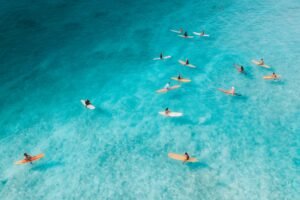
- The reef sites are unaffected. Snorkelling happens over structure in clear water away from the beach.
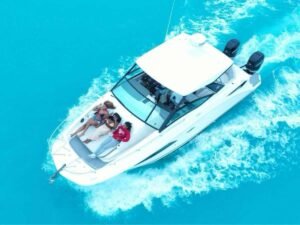
- The captain can see where it is. On the morning of your trip he knows which beaches are clean and which are not, and the route goes to the clean ones. That is not something you can do from a lounger.
Guests who book a charter in a seaweed week often say it was the best decision of the trip, for exactly this reason: it is the one day you are guaranteed to be somewhere clear.
What it does not affect
Worth saying plainly, because the forum photographs do not distinguish:
- Water clarity away from the shoreline
- Snorkelling at reef sites
- The colour of the water, which is the thing you actually came for
- Whether the boat runs
Sargassum has never cancelled a charter. Wind does that, and it is a different conversation.
If you are picking dates around it
Do not, really. Pick your dates around temperature, rain, crowds and price — which our month-by-month guide goes through properly — and accept that seaweed is a lottery nobody can predict twelve months out.
What you can do:
- Pick accommodation on a protected, reef-fronted stretch rather than an exposed windward coast.
- Check recent photographs, not stock ones. Local social media and recent reviews will tell you what this week looks like far better than anything else.
- Keep one day free for the boat, so you can go on a good day rather than a booked one.
- Ask us. We are on this water most days. If you message us the week before your trip, we will tell you what it is actually doing rather than what a seasonal chart says.
Is it dangerous?
Fresh sargassum in the water is harmless — it is seaweed, and small marine life lives in it. Large rotting accumulations on a beach release gases that smell strongly and can irritate eyes and airways, which is why resorts clear it. Do not swim into a thick mat, mostly because it is unpleasant rather than because it will hurt you.
Common questions
Which months are worst?
Heavier influxes across the wider Caribbean have tended to fall in spring and summer, with the northern winter generally clearer. It varies enormously by year.
Is Grace Bay affected?
Less than exposed coasts, because it faces north and sits behind the reef. Not never.
Will it spoil snorkelling?
Not at the boat-accessed reef sites. Shore snorkelling off an affected beach is another matter.
Do the sandbars get it?
No. They are in open shallow water away from any shoreline.
Can you tell us what it is like right now?
Yes — message us. We would rather give you a real answer than have you cancel a trip over a photograph from a different island.
Should we still book a boat day?
In a seaweed week, more so than usual. Check availability.